Dumpster Sizes Explained: How to Choose the Right Dumpster
Volume, weight, dimensions and the right size for every project, from a bathroom remodel to new construction.
Need it today? Call or text 704-690-4445 by 10 AM.
Start with two questions
Choosing the right dumpster size can make your cleanup faster, easier, and more cost-effective. A dumpster that is too small may require an additional haul or swap-out, while one that is larger than necessary can take up more space than your project requires.
Snappy Dumpster Rental offers 10, 15, 20 and 30-yard roll-off dumpsters for homeowners, contractors, remodelers, roofers, property managers, and construction crews throughout the Charlotte area, Union County, Mecklenburg County, and surrounding communities. The best size depends on two main factors:
- How much space the debris will take up(volume)
- How heavy the material will be(weight)
Large, lightweight materials often need more volume, while dense materials such as concrete, dirt, brick, and roofing shingles may reach the weight limit before the dumpster is physically full.
Dumpster sizes at a glance
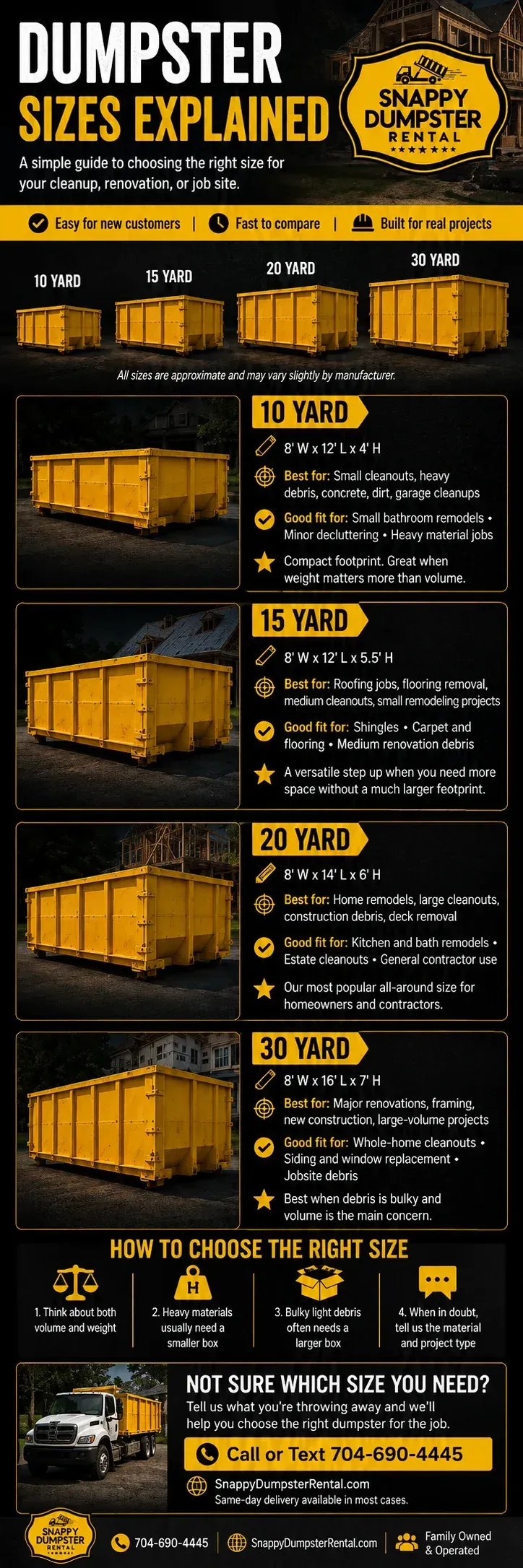
Prices, dimensions and a full comparison table: dumpster sizes, dimensions & prices.
Each size, explained
10-yard dumpster · $375
Approx. 12 ft L × 8 ft W × 4 ft H · 1 ton included
Our most compact option, good for small projects, limited work areas, and heavy materials that should not go in a larger container. The lower walls make hand or wheelbarrow loading easier.
- Small bathroom remodels
- Garage or basement cleanouts
- Concrete, brick, block, dirt and gravel
- Small flooring and landscaping projects
- Light demolition work
Heavy debris may reach the allowable weight while the container is only partially full, so a smaller dumpster is often the safest choice.
15-yard dumpster · $425
Approx. 12 ft L × 8 ft W × 5.5 ft H · 1.5 tons included
More capacity than a 10-yard with a compact footprint; a versatile choice for medium residential and contractor projects.
- Roofing tear-offs
- Flooring, carpet and padding removal
- Medium home cleanouts
- Small kitchen remodels and bathroom renovations
- Drywall, lumber and deck removal
- Yard cleanup, brush and branches
Often a good fit for residential roofs because shingles are dense and heavy.
20-yard dumpster · $450
Approx. 14 ft L × 8 ft W × 6 ft H · 2 tons included
One of the most popular choices, with a strong balance of capacity, accessibility and jobsite efficiency, and still manageable for many driveways.
- Kitchen remodels and bathroom renovations
- Whole-home, estate and rental property cleanouts
- Construction, drywall, lumber and framing debris
- Cabinets, decks, siding and window replacement
- Larger roofing jobs
Frequently the best starting point when you are unsure whether your project is small or large.
30-yard dumpster · $650
Approx. 16 ft L × 8 ft W × 7 ft H · 3 tons included
Designed for high-volume projects with large amounts of bulky debris.
- Major renovations and whole-house cleanouts
- Framing and new construction
- Commercial and property management cleanouts
- Siding and window replacement
- Lumber, packaging and jobsite debris
- Storm cleanup and light demolition
Not for heavy materials: concrete, dirt, gravel, brick and block may exceed safe hauling limits long before a 30-yard is full.
Dumpster volume vs. dumpster weight
One of the most important things to understand when choosing a roll-off dumpster.
Volume: bulky and light
How much physical space the debris occupies. These often need a larger dumpster because they fill it quickly:
- Lumber, cabinets and furniture
- Drywall and siding
- Brush and packaging
- Household junk
Weight: dense and heavy
How heavy the debris becomes once loaded. These may need a smaller dumpster or a restricted loading level, even with open space left:
- Concrete, brick, block and stone
- Dirt and gravel
- Roofing shingles and tile
- Plaster and wet debris
Every Snappy dumpster includes a weight allowance (1 ton for a 10-yard up to 3 tons for a 30-yard); extra weight is $95 per ton, billed to the hundredth of a ton. See pricing.
How to choose the right dumpster size
Before ordering, ask yourself these questions.
A bathroom remodel, roofing job, whole-home cleanout and concrete removal may all need different sizes.
A half-full dumpster of concrete can weigh more than a full dumpster of household furniture.
Think about the total scope. Renovation debris often expands once cabinets, drywall, flooring and fixtures come out.
Bulky materials need more volume; dense materials need stricter weight management.
Leave room for the dumpster and truck, clear of parked vehicles, low branches, wires and gates.
Size up for bulky debris, size down for heavy debris, or use the size finder.
Common size recommendations by project
| Project | Usually fits |
|---|---|
| Small cleanout (garage, attic, one room) | 10-yard |
| Medium home cleanout | 15 or 20-yard |
| Kitchen or bathroom renovation | 15 or 20-yard |
| Roofing project | 10, 15 or 20-yard by roof size and layers |
| Concrete, brick or dirt removal | 10-yard |
| Framing or new construction | 20 or 30-yard |
| Whole-home cleanout | 20 or 30-yard |
| Landscaping cleanup | 10, 15 or 20-yard (dirt, stumps and roots need planning) |
Related guides: what can go in a dumpster · what cannot · permits and placement rules · all resources
Avoid overfilling your dumpster
All debris must remain level with or below the top rail. Materials above the top edge create an unsafe load and may prevent pickup.
- Break down bulky items when possible
- Place large flat items along the sides
- Distribute weight evenly and avoid concentrating heavy material in one area
- Keep debris below the top rail
- Ask before loading unusually heavy or restricted materials
Dumpster size questions
What size dumpster do I need?
Most small cleanouts and heavy debris fit a 10-yard; medium cleanouts, bathroom remodels and roofs a 15-yard; kitchen remodels, whole-home cleanouts and most renovations a 20-yard; and new construction, framing and large cleanouts a 30-yard. Weight matters as much as volume.
What size dumpster do I need for concrete, brick or dirt?
A 10-yard is often the best option because the material is extremely heavy and can exceed safe hauling limits long before a larger container is full.
What size dumpster do I need for a roof?
A 10, 15 or 20-yard depending on roof size, shingle type and number of layers. Tell us the approximate square footage and layers and we will recommend a size.
What are the dimensions of each dumpster?
Approximately 12 × 8 × 4 ft (10-yard), 12 × 8 × 5.5 ft (15-yard), 14 × 8 × 6 ft (20-yard) and 16 × 8 × 7 ft (30-yard).
Can I fill the dumpster above the top?
No. All debris must remain level with or below the top rail. Overfilled dumpsters may need to be unloaded before they can be transported safely.
What is the difference between dumpster volume and weight?
Volume is how much space debris takes up; weight is how heavy it is. Bulky, light materials need more volume, while dense materials like concrete, dirt and shingles may hit the weight allowance with space left over.
Not sure what size you need?
You don't need to guess. Tell us the type of project, the materials, roughly how much debris, the location and any access concerns, and we'll recommend the right size. Call or text 704-690-4445.
Size pages: 10-yard · 15-yard · 20-yard · 30-yard · Size finder · Same-day delivery