What Cannot Go in a Dumpster? A Complete Guide to Prohibited Items
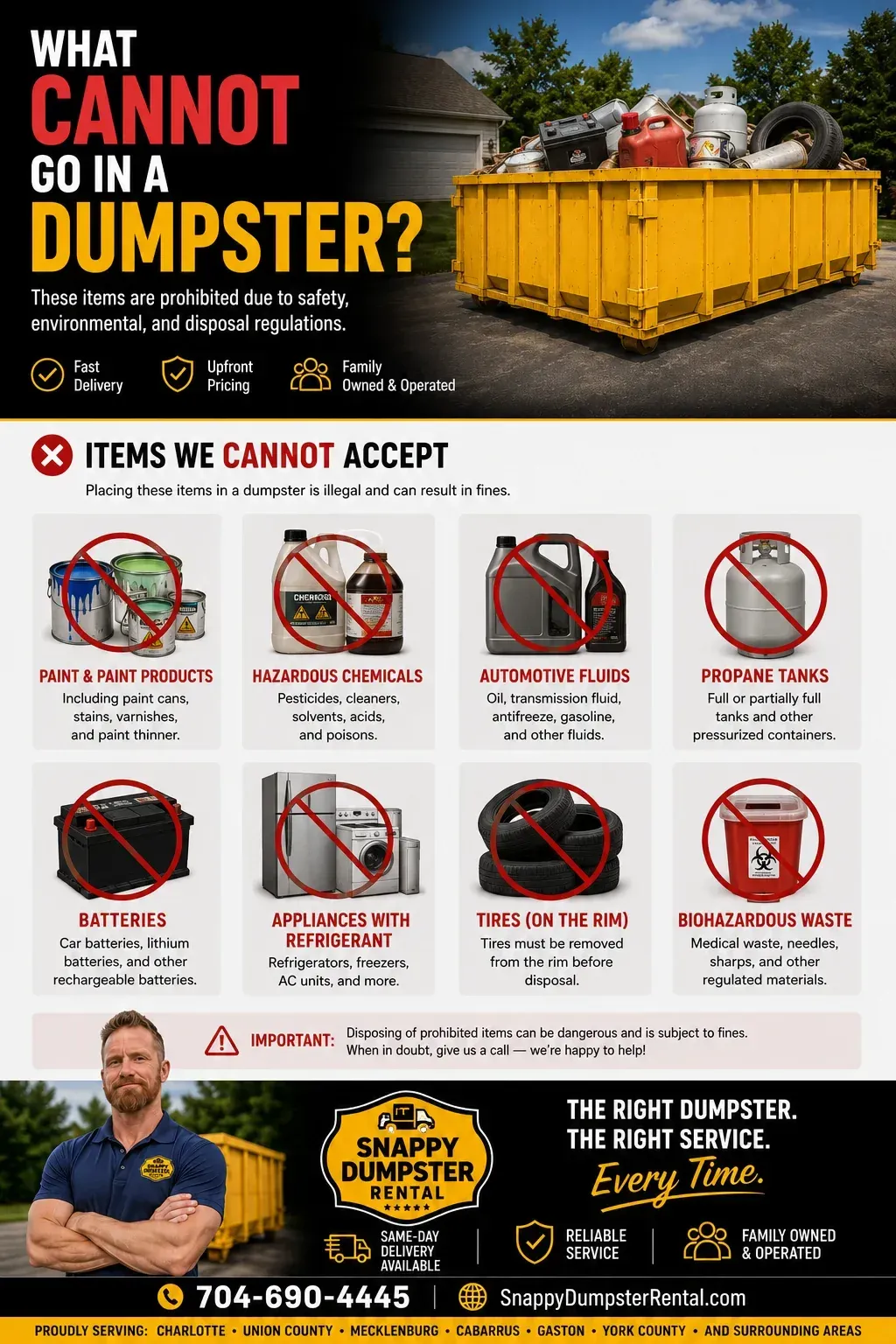
Renting a roll-off dumpster is one of the easiest ways to dispose of waste from a home renovation, roofing project, garage cleanout, landscaping job, or construction site. While most household junk and construction debris can be safely placed in a dumpster, certain materials are prohibited because of environmental regulations, landfill restrictions, and safety concerns.
Knowing what cannot go in a dumpster before your project begins can help you avoid additional charges, protect the environment, and ensure your dumpster is picked up on schedule. This guide explains the most common prohibited items and provides general guidance on how they should be disposed of instead.
Why Are Some Items Prohibited?
Most prohibited materials fall into one of three categories:
- They pose a safety risk during transportation.
- They are regulated by state or federal environmental laws.
- Local landfills do not accept them with normal construction or household waste.
These restrictions help protect landfill employees, truck drivers, the environment, and the surrounding community.
Hazardous Chemicals
Hazardous chemicals should never be placed in a roll-off dumpster.
Examples include:
- Pesticides
- Herbicides
- Pool chemicals
- Solvents
- Paint thinners
- Industrial cleaners
- Adhesives
- Unknown chemicals
These products can leak during transport, contaminate landfills, and create dangerous reactions when mixed with other waste.
Contact your local household hazardous waste collection program for proper disposal.
Paint and Stains
Paint disposal depends on the type and condition of the paint.
Generally prohibited:
- Wet latex paint
- Oil-based paint
- Wood stains
- Varnishes
- Paint thinner
In many areas, completely dried latex paint can be disposed of with normal waste. If you're unsure, ask us before loading your dumpster.
Automotive Fluids
Automotive fluids are prohibited because they can contaminate soil and groundwater.
Examples include:
- Motor oil
- Transmission fluid
- Brake fluid
- Antifreeze
- Gasoline
- Diesel fuel
- Hydraulic fluid
Most automotive parts stores and recycling centers accept many of these fluids for proper recycling.
Batteries
Many batteries contain chemicals or heavy metals that require specialized recycling.
Do not place:
- Car batteries
- Lithium batteries
- Rechargeable batteries
- UPS batteries
- Marine batteries
Many retailers and recycling centers offer battery recycling programs.
Tires
Most landfills prohibit tires because they trap air, damage landfill equipment, and create environmental concerns.
This includes:
- Passenger vehicle tires
- Truck tires
- Tractor tires
- ATV tires
Snappy Dumpster Rental does accept tires for an additional disposal fee. Tires must be placed separately on top of the debris—not buried inside the dumpster—so they can be removed before the dumpster is emptied. The fee is $25 per tire, and tires must be off the rim. Text or call us before loading them.
Electronics (E-Waste)
Electronics often contain materials that require special recycling.
Examples include:
- Televisions
- Computer monitors
- Desktop computers
- Laptops
- Printers
- Copiers
- Networking equipment
Many counties offer electronic recycling events throughout the year.
Appliances Containing Refrigerants
Appliances containing refrigerants require special processing before disposal.
Examples include:
- Refrigerators
- Freezers
- Air conditioners
- Dehumidifiers
- Water coolers
These appliances must have refrigerants properly removed before they can be recycled or disposed of.
Propane Tanks and Compressed Gas Cylinders
Never place pressurized cylinders inside a dumpster.
Examples include:
- Propane tanks
- Oxygen cylinders
- Helium tanks
- Acetylene bottles
- Fire extinguishers
These containers can become extremely dangerous if crushed during transport or disposal.
Asbestos-Containing Materials
Materials that may contain asbestos require specialized handling and disposal.
Examples may include:
- Older insulation
- Pipe wrap
- Certain flooring products
- Ceiling materials
- Some roofing materials
- Vermiculite insulation
If your project involves older construction materials and you suspect asbestos may be present, consult a qualified professional before beginning demolition.
Medical Waste
Medical waste should never be disposed of in a standard construction dumpster.
Examples include:
- Needles and syringes
- Biohazard materials
- Pharmaceuticals
- Medical sharps
- Contaminated bandages
These materials require specialized disposal procedures.
Explosives and Ammunition
Explosive or highly combustible materials cannot be accepted.
Examples include:
- Fireworks
- Ammunition
- Explosive materials
- Flares
Contact your local authorities for guidance on proper disposal.
Large Quantities of Concrete, Dirt, and Rock
Concrete, brick, dirt, asphalt, gravel, and other dense materials are generally accepted—but they must be loaded carefully because of weight restrictions.
These materials can quickly exceed the legal hauling capacity of a dumpster even when it appears only partially full.
If your project involves heavy debris, let us know when scheduling your rental so we can recommend the appropriate dumpster size and loading guidelines.
Frequently Asked Questions
Can I throw away paint?
Wet paint should not be placed in a dumpster. Dried latex paint may be acceptable in some situations. Contact us if you're unsure.
Can I put a refrigerator in a dumpster?
Not unless all refrigerants have been professionally removed first.
Can I throw away tires?
Yes—but tires require special handling and incur an additional disposal fee. Place them on top of the debris rather than burying them in the dumpster.
Can batteries go in a dumpster?
No. Batteries should be recycled through an approved recycling program.
What if I'm unsure about an item?
The easiest solution is simply to ask. Our team is happy to answer questions before your dumpster is delivered so you can avoid surprises during pickup.
We're Here to Help
Every cleanup project is different, and disposal regulations can vary depending on the material. If you're unsure whether an item can go in your dumpster, contact Snappy Dumpster Rental before loading it. We'll help you determine the safest and most appropriate disposal method so your project stays on schedule.
We proudly provide 10, 15, 20, and 30-yard roll-off dumpster rentals for homeowners, contractors, businesses, and property managers throughout the Charlotte metro area. Be sure to explore our other Dumpster Resource Center guides for information on dumpster sizes, weight limits, service areas, delivery preparation, and accepted materials before your next cleanup project.