What Can Go in a Dumpster? A Complete Roll-Off Dumpster Disposal Guide
Whether you're cleaning out your garage, remodeling your kitchen, replacing a roof, or managing a construction project, knowing what can go in a dumpster is one of the most common questions customers ask before renting a roll-off dumpster. Understanding what materials are accepted helps you avoid delays, additional fees, and unnecessary trips to disposal facilities.
At Snappy Dumpster Rental, we proudly serve homeowners, contractors, businesses, and property managers throughout the Charlotte metro area with 10, 15, 20, and 30-yard roll-off dumpsters. This guide explains the most common materials that can typically be placed in your dumpster and offers practical tips for loading it safely and efficiently.
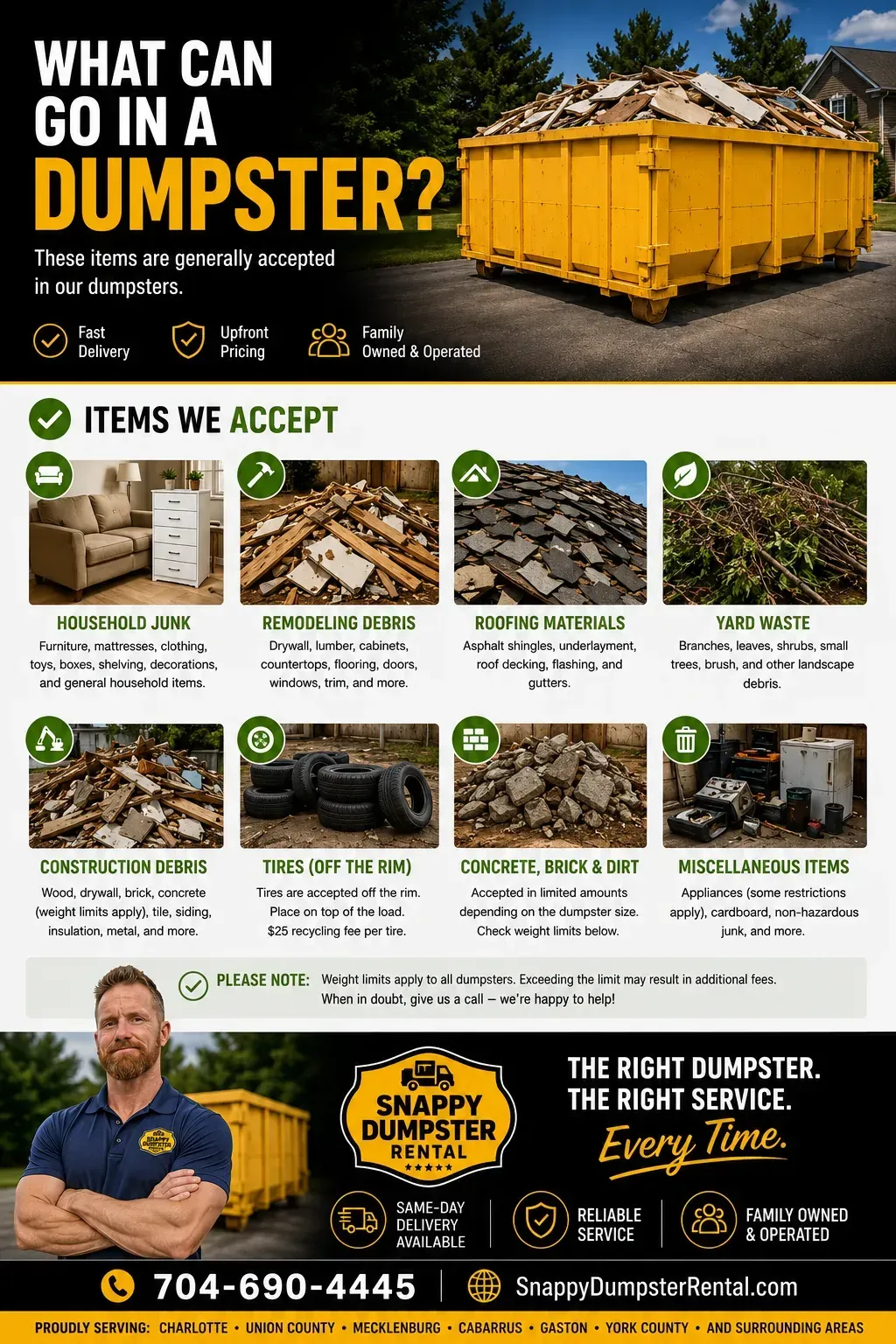
Household Junk
Most everyday household items can be safely disposed of in a roll-off dumpster, making it an excellent option for moving, downsizing, estate cleanouts, spring cleaning, or preparing a home for sale.
Common household items include:
* Furniture
* Mattresses and box springs
* Tables and chairs
* Toys
* Clothing and shoes
* Books
* Small household items
* Decorations
* Storage bins
* Non-electronic exercise equipment
Construction and Demolition Debris
Roll-off dumpsters are designed for construction and remodeling projects.
Accepted construction materials typically include:
* Drywall
* Lumber
* Plywood
* Trim
* Cabinets
* Doors
* Windows (non-hazardous)
* Flooring
* Carpet
* Tile
* Insulation
* Siding
* Decking materials
If you're completing a kitchen remodel, bathroom renovation, basement finishing project, or whole-home remodel, a dumpster is often the safest and most efficient way to manage debris.
Roofing Materials
Roof replacement projects generate large amounts of debris that are well suited for a roll-off dumpster.
Common roofing materials include:
* Asphalt shingles
* Roofing felt
* Underlayment
* Flashing
* Roof vents
* Ridge cap shingles
* Drip edge
* Roof decking
Because roofing materials are heavy, choosing the correct dumpster size and staying within the included weight allowance is important.
Yard Waste
Many landscaping materials can also be disposed of in a dumpster.
Examples include:
* Branches
* Leaves
* Bushes
* Shrubs
* Small trees
* Mulch
* Garden debris
* Storm cleanup materials
Large quantities of dirt, rock, or concrete are significantly heavier than typical debris and may require a different dumpster size or loading strategy.
Home Remodeling Materials
Home improvement projects often produce a combination of materials.
Examples include:
* Kitchen cabinets
* Bathroom fixtures
* Vanities
* Countertops
* Shelving
* Closet systems
* Interior doors
* Laminate flooring
* Hardwood flooring
* Vinyl plank flooring
Combining these materials in one dumpster is usually acceptable as long as prohibited items are excluded and weight limits are observed.
Garage, Attic, and Basement Cleanouts
A dumpster makes large cleanout projects much easier.
Customers commonly dispose of:
* Old shelving
* Cardboard
* Plastic storage containers
* Holiday decorations
* Broken furniture
* Children's toys
* Household clutter
* Garage organization materials
Taking the time to separate prohibited items before loading the dumpster can save time later.
Commercial Cleanup Projects
Businesses often use dumpsters for:
* Office cleanouts
* Retail renovations
* Warehouse cleanup
* Property maintenance
* Tenant improvements
* Commercial remodeling
Roll-off dumpsters provide a convenient solution for projects that generate more waste than standard trash collection can handle.
Load Your Dumpster Safely
To maximize space and ensure safe transportation:
* Place large, flat items on the bottom.
* Break down furniture whenever possible.
* Distribute heavy materials evenly.
* Keep debris level with the top edge of the dumpster.
* Do not overload above the rim.
* Separate prohibited materials before loading.
Proper loading helps ensure safe pickup and prevents additional charges.
What Cannot Go in a Dumpster?
Some items require special handling and should never be placed in a standard roll-off dumpster.
Examples include:
* Hazardous chemicals
* Wet paint
* Automotive fluids
* Batteries
* Propane tanks
* Tires still on the rim (off-rim tires are accepted for $25 each)
* Refrigerants
* Certain electronics
* Asbestos-containing materials
* Medical waste
For a complete list of prohibited materials, visit our **What Cannot Go in a Dumpster** guide.
Need Help Choosing the Right Dumpster?
If you're unsure which dumpster size is best for your project or have questions about specific materials, our team is happy to help. We offer 10, 15, 20, and 30-yard roll-off dumpsters for residential, commercial, and construction projects throughout the Charlotte metro area.
Whether you're tackling a garage cleanout, roofing project, home renovation, landscaping job, or commercial construction project, Snappy Dumpster Rental can help you choose the right dumpster and make waste disposal simple, affordable, and hassle-free.
Browse our other Dumpster Resource Center guides for information on dumpster sizes, weight limits, service areas, delivery preparation, and prohibited materials.